Gentle Movement & Mobility
Breath-Led, Energising, Full-Body Flow
There’s a misconception that movement needs to be intense to be effective.
Sometimes the most powerful thing you can do for your body is move gently. Move deliberately. Move with your breath.
Gentle movement and mobility work isn’t about “taking it easy.” It’s about creating space. It’s about reconnecting with your body. It’s about building strength and energy from the inside out.
When you pair movement with breath, everything changes.
Your nervous system settles.
Your joints feel smoother.
Your strength feels integrated rather than forced.
Your energy builds instead of depletes.
Let’s explore what that looks like in practice.
Why Breath-Led Movement Works
Your breath is your internal metronome.
When you time movement with your inhale and exhale:
Muscles engage more efficiently
Core activation becomes natural
Mobility improves without forcing range
Your body moves as one connected system
Breath creates rhythm. Rhythm creates flow. Flow creates strength.
And when we focus on full-body compound movements — patterns that involve multiple joints and muscle groups — we build mobility and stability at the same time.
Energising Through Expansion & Contraction
Gentle doesn’t mean passive.
The key is controlled expansion (inhale) and active contraction (exhale). Each movement becomes purposeful. Each rep becomes integrated.
Here are some powerful breath-led movements you can use in a mobility flow:
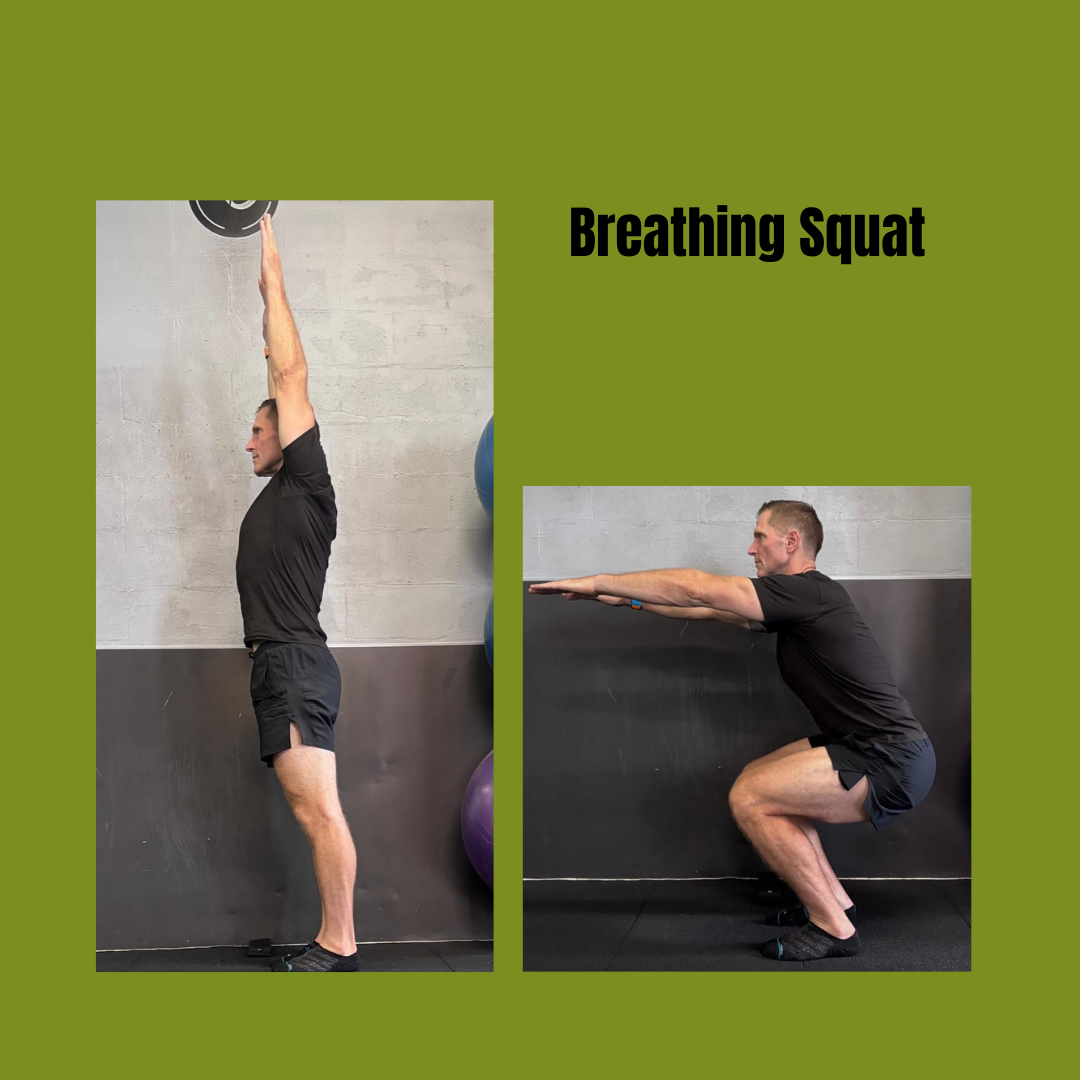
1. The Breathing Squat
Inhale: Stand tall, expand through your ribs.
Exhale: Sit back into a slow squat, ribs soft, core engaged.
Hold: Pause at the bottom, lengthen your spine.
Inhale: Drive through your feet to stand.
This builds hip mobility, ankle range, and deep core control — without rushing.
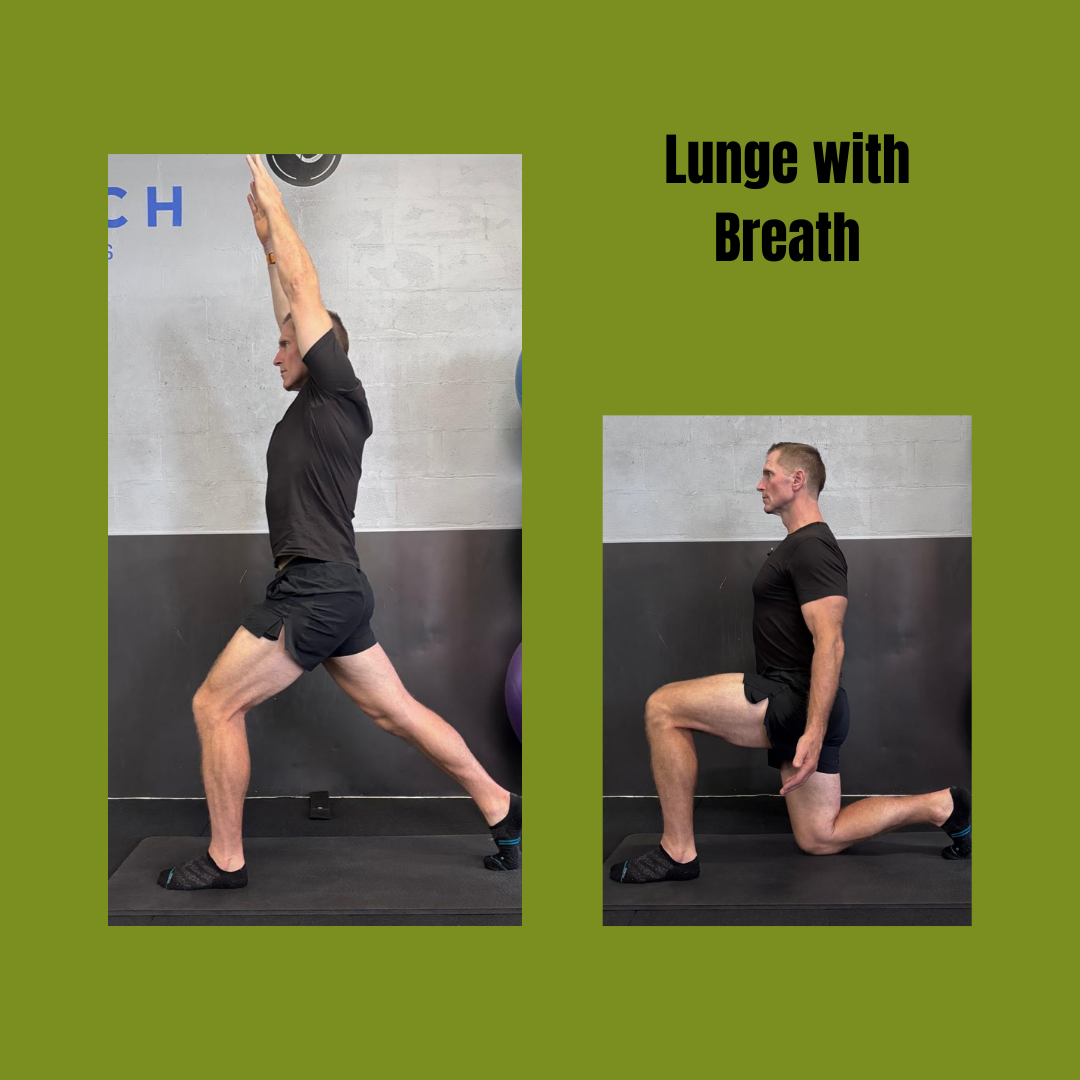
2. Lunge with Breath
Establish lunge position: knee on floor in line with hip and shoulder, opposite leg at 90º foot flat on floor.
Inhale: Reach arms overhead, expanding through the front body lifting chest.
Exhale: Sink knee gently to floor, grounding through front flat foot.
Inhale: Reach arms overhead, expanding through the front body lifting chest.
At end of set: Step forward with control.
Lunges open the hips while building single-leg strength and balance.
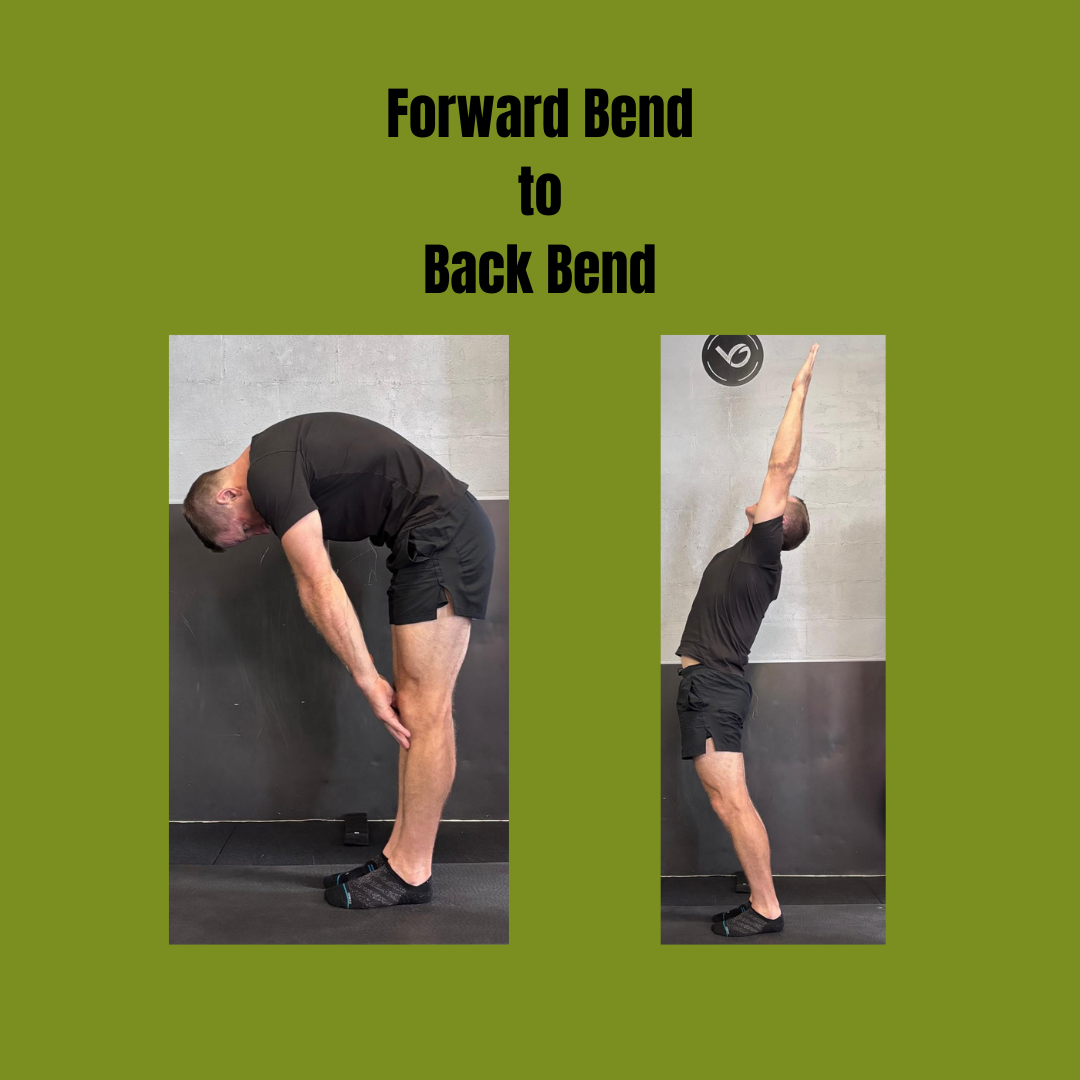
3. Forward Bend to Back Bend
Inhale: Stand tall reach arms above head.
Exhale: Fold forward, soft knees, release your neck.
Inhale: Roll up slowly, stacking your spine.
Inhale (continue): Reach arms overhead, gently open into a small back bend.
Exhale: Return to neutral.
This wave-like motion nourishes your spine through flexion and extension — restoring mobility segment by segment.
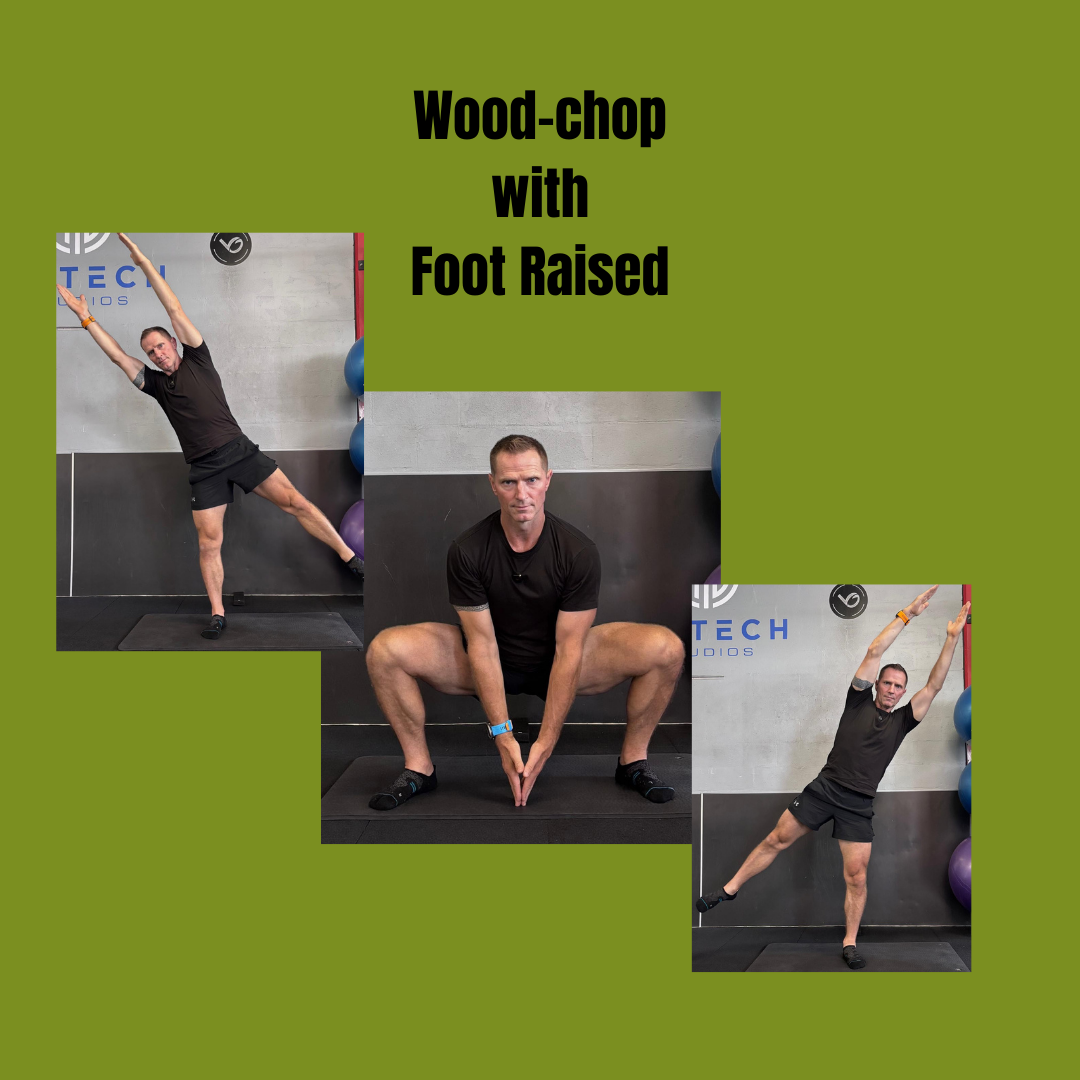
4. Wood-Chop with Foot Raised
A beautiful cross-body compound movement.
Inhale: Lift left foot slightly, reach arms overhead to the right.
Exhale: Place left foot on floor, lower arms down diagonally as you squat to the floor.
Inhale: Lift right foot slightly, reach arms overhead to the left.
Exhale: Place right foot on floor, lower arms down diagonally as you squat to the floor.
Inhale: Return with control to standing.
This integrates balance, rotation, and core stability — training the body to move as one connected unit.
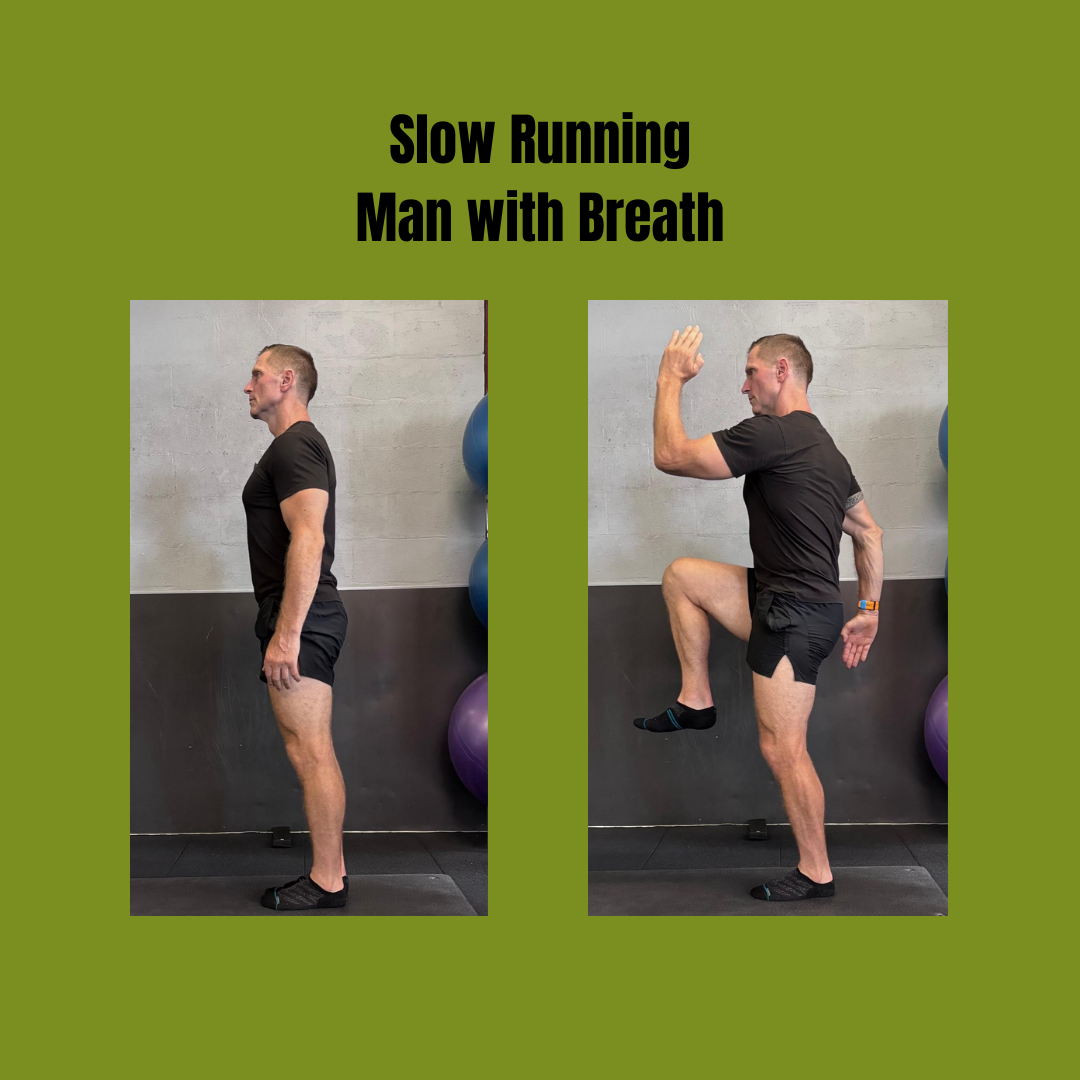
5. Slow Running Man with Breath
Controlled. Intentional. Energising.
Inhale: Start in standing position.
Exhale: Lift left knee while drawing right bent arm forward. Take right elbow to left knee.
Inhale: Lower left leg and right arm to standing.
Exhale: Lift right knee while drawing left bent arm forward. Take left elbow to right knee.
Inhale: Lower right leg and left arm to standing.
Keep it slow enough to feel every muscle engage. This builds coordination, hip flexor strength, and cardiovascular activation without high impact.
What You’ll Notice
After 10–15 minutes of breath-timed compound movements, you won’t feel exhausted.
You’ll feel:
Warm
Open
Grounded
Clear-headed
Energised
That’s the difference between draining your system and nourishing it.
A Simple Flow to Try
Move slowly. Match every rep to your breath.
10 slow running man switches
5 forward fold to back bends
5 breathing squats
5 wood-chops each side
5 lunges each side
Repeat 2–3 rounds.
No rush. No strain. Just rhythm.
Gentle movement is not a regression.
It’s intelligent training.
It’s how we maintain mobility, build sustainable strength, and keep our energy steady — especially in seasons where intensity isn’t what the body needs.
Move with your breath.
Your body already knows the rhythm.